
Former CDS Anil Chauhan stated that China poses a long-term and comprehensive challenge to India, with the boundary issue remaining unresolved due to differing perceptions of the Line of Actual Control. However, he emphasised that India's ties with Beijing cannot be solely defined by border disputes, advocating for engagement through platforms like SCO and BRICS. He also highlighted the broader global geopolitical flux and instability in India's neighbourhood as significant security concerns, stressing the need for self-reliance.

Prime Minister Narendra Modi hosted Iranian President Masoud Pezeshkian in New Delhi for talks focusing on the West Asia situation, bilateral relations, and BRICS cooperation. The meeting, Pezeshkian's first visit to India as president, comes amidst heightened tensions in West Asia due to new US sanctions on Iran and concerns over global oil supplies from the Strait of Hormuz. Both leaders emphasised regional stability and economic resilience.
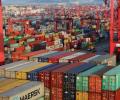
Civil Aviation Minister K Rammohan Naidu announced significant opportunities for Micro, Small, and Medium Enterprises (MSMEs) within India's rapidly expanding aviation sector. With Indian airlines ordering over 1,600 aircraft and the aerospace market projected to double by 2035, there's a massive scope for Indian suppliers to integrate into global aerospace supply chains, moving beyond assembly to design and manufacturing.

Union Education Minister Pralhad Joshi announced that revised NCERT textbooks for classes 10 to 12 are being prepared in "mission mode," while textbooks for classes 1 to 9 under the new National Curriculum Framework have already been released. He emphasised NCERT's role in building a 'Viksit Bharat' and highlighted the need for curricula to evolve with AI advancements and the importance of India's young population as a global asset.

'... to see that young people are gainfully employed. After that, it will become very difficult as we will start ageing much more rapidly.' 'We have a huge proportion of Gen Z. After 2030, every year, we will start seeing a gradual shift towards a slightly older society.'

India's markets regulator Sebi has launched 'Demat 2.0', a pilot project for tokenisation of corporate bonds, enabling atomic settlement through integration with RBI's wholesale CBDC. This new market infrastructure uses Distributed Ledger Technology (DLT) to make bond issuance, trading, and settlement faster and more efficient. India is the first country to issue corporate bonds natively on a distributed ledger with central bank digital currency settlement. Additionally, RBI Governor announced new UPI innovations: 'Tap & Pay' for faster POS transactions and MyUPI, an AI-powered customer support solution.

Bangladesh has confirmed that Prime Minister Tarique Rahman will not attend the upcoming BRICS Summit in India, clarifying that the invitation was extended to him as the BIMSTEC Chair, not as Bangladesh's Prime Minister. The nation is prioritising bilateral visits and discussions, while also addressing national interests like the expiring Ganges Water Sharing Treaty.

'Indian private sector hospitals provide quality healthcare at a fraction of the global cost.'

Japan inaugurated the 20th Asian Games in Nagoya with a vibrant opening ceremony that seamlessly blended advanced technology and rich cultural traditions, despite earlier organisational challenges.

Quimcy Dsouza, a former Maharashtra footballer, made an unconventional journey to the Asian Games teqball semifinals after discovering the sport through Ronaldinho. Despite a defeat, she expressed pride in her performance and her role in pioneering teqball in India, highlighting the challenges of limited funding and her dedication to growing the sport.

Group Captain Angad Pratap, one of the astronauts for India's Gaganyaan mission, addressed the programme's delays, stating they are inherent in developing human spaceflight. He emphasised the need for patience to ensure the mission's eventual success and detailed his involvement in designing the human-machine interface. ISRO plans uncrewed missions before the crewed launch, now targeted for 2027.

Former Asian Games gold medallist Shiv Kapur expresses strong confidence in India's golf squad for the upcoming Aichi-Nagoya Games, stating that anything less than a gold medal would be a disappointment given the talent pool. He highlights the potential of both men's and women's teams, including top players like Aditi Ashok and Diksha Dagar, to end India's long wait for a golf gold. The article also touches upon the healthy competition between Indian golf leagues.

The FCNR (B) stratagem relies on using public money to defend the rupee. The State subsidises foreign borrowing to attract dollars. This tool requires large-scale borrowing to make a material difference against a gross external flow of $11 billion a day. A commensurately large fiscal cost falls upon the exchequer. The ministry of finance will choose how much it is willing to spend in exchange for this round number, points out Ajay Shah.

India's total goods trade with BRICS nations more than doubled from FY21 to FY26, reaching USD 417.5 billion, but a significant surge in imports, particularly from China and Russia, has caused India's trade deficit with the bloc to more than triple, reaching USD 226.1 billion.

Former chief selector and head coach Haroon Rasheed has attributed the decline of Pakistan cricket to the domestic structure changes implemented by former Prime Minister Imran Khan, who insisted on reducing first-class teams despite recommendations for a hybrid model.

India has once again raised alarms over the escalation in the security situation in the Red Sea area and strongly condemned Houthi strikes targeting Saudi Arabian territory, "including on civilians and economic assets."

Pakistan continues to offer a 7 million rupee reward for information leading to the arrest of Jaish-e-Mohammed chief Masood Azhar, who remains on the Federal Investigation Agency's "Red Book" of most-wanted terrorists. This development comes ahead of the Financial Action Task Force's plenary meeting, highlighting Pakistan's ongoing efforts against terror financing.

India contributes 31.24 per cent of the global coconut output and 17.90 per cent of the worldwide cultivation area.

AICC general secretary K C Venugopal announced that Rahul Gandhi would lead the INDIA bloc in the 2029 Lok Sabha elections, dismissing reports of TVK proposing C Joseph Vijay as a prime ministerial candidate. Venugopal highlighted Gandhi's widespread appeal and campaigns on key issues, while also addressing internal alliance differences and criticising the BJP government's actions.
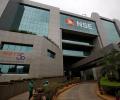
The National Stock Exchange (NSE) has set its initial public offering (IPO) price band at Rs 1,700-1,785 per equity share, with the subscription period running from September 17 to September 21, aiming to raise up to Rs 22,569 crore.

Prime Minister Narendra Modi will host the 'Khelo India Dialogue' to engage with youth on India's sporting journey, national development, and Olympic aspirations. The virtual event, structured around five key themes including sports ecosystem improvement, youth leadership, and a 'Nasha Mukt Yuva' movement, aims to gather ideas for a stronger, youth-led 'Viksit Bharat' and nurture talent for the 2036 Olympics.

Iranian President Masoud Pezeshkian declared that Iran will not succumb to "bullying" from the US and Israel, vowing to protect national interests amidst escalating West Asian hostilities. During his visit to New Delhi for the BRICS summit, Pezeshkian also discussed strengthening bilateral ties with Prime Minister Narendra Modi and advocated for local currencies in BRICS trade, positioning Iran as a strategic energy and transport partner.

Indian golfer Pranavi Urs expresses confidence in the women's team for the Asian Games, emphasising consistency, strong driving, and creating birdie opportunities over chasing specific low scores. She highlights the team dynamic with Aditi Ashok and Diksha Dagar and discusses her preparation, international experience, and areas for improvement in her game.

The BRICS Youth Ministers' Meeting, organised by India's Sports Ministry, successfully concluded in Visakhapatnam. Presided over by Sports Minister Mansukh Mandaviya, the meeting built upon previous youth engagements, focusing on developing young leaders and promoting youth cooperation among BRICS nations.

The challenge for India lies in navigating complex landscape to its best advantage. The BRICS Summit will test its navigation skills, asserts former foreign secretary Shyam Saran.
Razorpay CEO Harshil Mathur highlights India's leadership in real-time payments, stating it can foster numerous billion-dollar fintech companies capable of expanding globally. He draws parallels with the US internet boom and discusses how India's unique regulatory and private sector collaboration, exemplified by UPI, can be replicated in other emerging markets. Mathur also touches upon the opportunities and risks associated with leveraging AI in business.

Prime Minister Narendra Modi, addressing the SCO summit in Bishkek, called for a united front against terrorism and its financing, rejecting double standards. He emphasised resolving conflicts through dialogue and diplomacy, not battlefields. Modi also highlighted that connectivity projects must respect national sovereignty and territorial integrity, a veiled reference to China's Belt and Road Initiative. India's vision for SCO rests on security, connectivity, and opportunity.

Any military response to a cross-border terror attack from Pakistan will have to take into account the new alignments beginning to take shape in the region, points out former foreign secretary Shyam Saran.

In flood-ravaged Nepal, drones are playing an unprecedented role in disaster response, from airlifting bodies from inaccessible areas to delivering essential supplies and searching for trapped workers. This innovative use of UAVs is transforming humanitarian aid and rescue operations in the challenging Himalayan terrain.

India has highlighted 13 key outcomes from the recent Shanghai Cooperation Organisation (SCO) summit, focusing on enhanced cooperation in security, counter-terrorism, and addressing transnational threats. These outcomes include the establishment of a Universal Centre for Countering Challenges and Threats to Security, a strong stance against state-sponsored terrorism, and agreements on narcotics control, climate change, and artificial intelligence, reinforcing India's engagement in the Eurasian region.

Fighting in Yemen has intensified as Houthi rebels advance on strategic government-held areas like Marib and Taiz, putting pressure on Saudi Arabia to respond. The conflict is also linked to wider US-Iran tensions affecting shipping in the Strait of Hormuz, with former US President Trump commenting on the situation.
RBI Governor Sanjay Malhotra stated that the central bank consistently views fintechs as 'valuable partners' in shaping India's future financial system, crediting the sector with expanding financial inclusion, enhancing customer experience, and streamlining credit delivery, particularly for MSMEs.

The Indian government has introduced a 0.4% fee on UPI transactions above Rs 2,000 for merchants, effective October 15, sparking strong opposition from political parties and traders. Despite accusations of foreign influence and demands for a rollback, the finance ministry and top functionaries have stated there will be no reversal, citing the need for a self-sustaining digital payments ecosystem.

Non-resident Indians are increasingly investing in luxury homes in India, driven by geopolitical uncertainties, particularly the Iran war. This trend is observed across major cities like Mumbai, Bengaluru, and the National Capital Region, with developers noting a significant rise in NRI pre-sales. While some see it as a temporary shift, others believe India is becoming a stable, long-term investment destination for NRIs, especially those from West Asia.

'Modi had his own cricket team in his school days. He was a good cricketer.'

South Korean male professional tennis players face a unique challenge: mandatory military service, which interrupts their careers for 18 months. This article explores how players like Seong-chan Hong, Hyeon Chung, and Soonwoo Kwon adapt to this obligation, with some earning exemptions through sporting achievements while others navigate a return to the professional circuit after their service.

From ancient gurus to pioneering educationists and social reformers, India's history is peopled by remarkable teachers who saw learning as a force for change.

On the 25th anniversary of that world-changing morning in New York, it is also for the rest of to reflect. Not only on those who were killed but also on why the event happened and what led to it and what came after it, asserts Aakar Patel.

India's current account deficit could widen to 1.7 per cent of GDP, or about $71 billion, if crude oil prices stay above $90 a barrel for a significant part of the second half of FY27.

Gaganyaan astronaut Prasanth Balakrishnan Nair stressed the critical importance of AI sovereignty for national cybersecurity, citing the increasing difficulty in distinguishing between real and fake content due to AI. Speaking at the Kerala Cyber Suraksha Summit, Nair highlighted that future conflicts and industries would involve a 'whole-of-nation approach,' blurring physical and digital boundaries. He urged greater awareness of digital threats and emphasised India's need to build on its technological capabilities in AI and cybersecurity, drawing parallels with the success of Chandrayaan-3. Other speakers also underscored the rising threat of cyberattacks and the potential for Kerala to contribute to national technology requirements.
